What Is Psoriasis? Causes, Symptoms, Diagnosis and Treatment
May 27, 2026 · Dr. Mehmet İlteber Bahadır
Psoriasis is a chronic inflammatory skin disease that presents with redness, scaling and occasional itching. Its severity varies from person to person.
What is it?
A fluctuating disease that arises when the immune system’s response to skin cells changes. Skin cells renew faster than normal; whitish scaling appears on a reddened base, sometimes with cracking/bleeding and itching/burning. The most common is plaque psoriasis (elbows, knees, scalp, lower back); there are also subtypes that affect the nails/scalp/skin folds.
What causes it?
Genetic predisposition, immune system mechanisms, and environmental triggers (infection, medication, trauma, smoking/alcohol, obesity, stress) — it is multifactorial.
Its symptoms
Sharply demarcated red plaques, white-silver scaling, itching/burning/tenderness, nail changes, dandruff-like flaking on the scalp, and in some patients joint pain/swelling/stiffness (psoriatic arthritis).
Is it contagious?
No — it does not spread by touch, through shared items, or through a pool/the sea.
Does it completely heal?
It follows a chronic course; there are periods of flare-ups and remission. The goal of treatment is not to eliminate it completely but to bring lesions under control, reduce the frequency of flare-ups, ease itching and manage joint involvement — the goal is to provide the person with the best possible quality of life.
Diagnosis
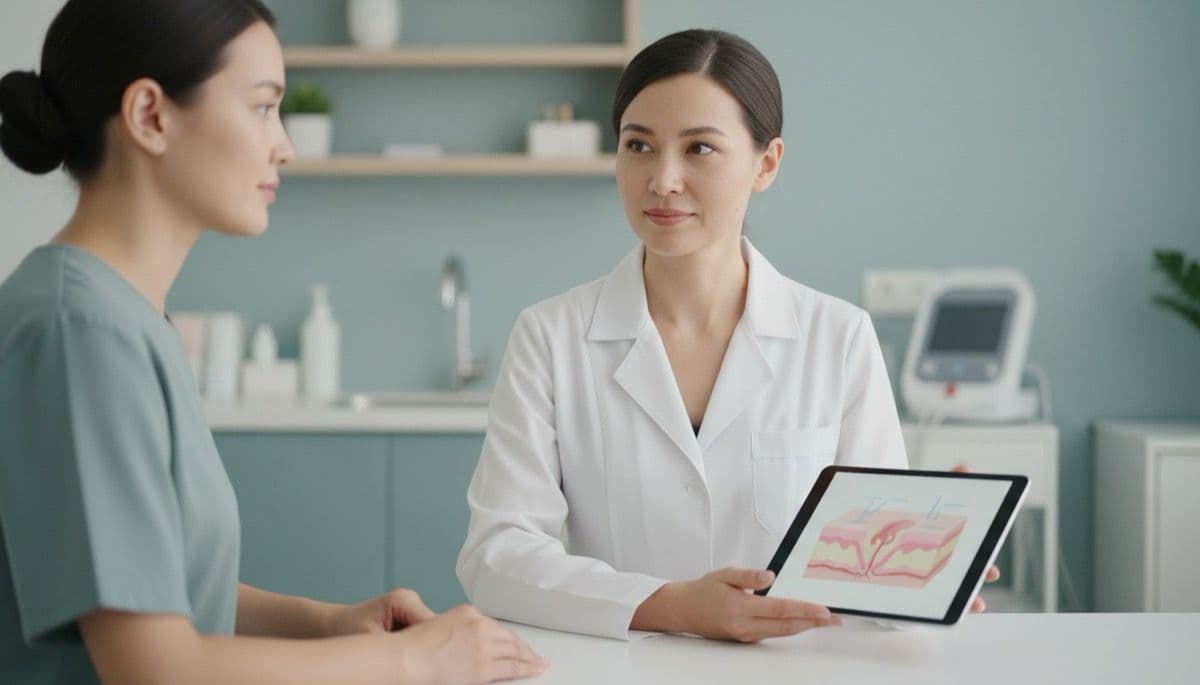
The clinical examination of a dermatologist; if needed, a biopsy or blood tests. A holistic assessment (including overall health and accompanying conditions) is important.
How is treatment planned?
It is planned individually: topical treatments (cream/ointment/lotion/shampoo — the first step), phototherapy (light therapy), systemic treatments (oral/injection, requiring specialist follow-up), and supportive approaches (moisturizer, asking about smoking/alcohol, weight management, control of accompanying conditions). A holistic and personalized plan rather than a single miracle method.
What to watch out for in daily life
Avoiding excessive hot water/harsh scrubbing/chemicals, using moisturizer regularly, limiting smoking/alcohol, consulting a physician for weight management, and seeking support during long periods of stress — these do not replace treatment; they are complementary.
Summary
A chronic inflammatory disease in which genetic, immune and environmental factors play a role together; it is not contagious; the goal of treatment is to bring it under control and improve quality of life, and it is planned individually.
This article is intended solely for general information purposes; it does not constitute a diagnosis or treatment recommendation. You should make your decisions together with the specialist physician who examines you.

Dr. Mehmet İlteber Bahadır
With 29+ years of experience, he applies natural, cortisone-free treatment approaches for psoriasis, eczema and rheumatic conditions.
Have a question?
Leave us what you'd like to know about What Is Psoriasis? Causes, Symptoms, Diagnosis and Treatment, and we'll call you back.